The Suit as a Medium
Revisiting the 2025 Met Gala, "Superfine: Tailoring Black Style"

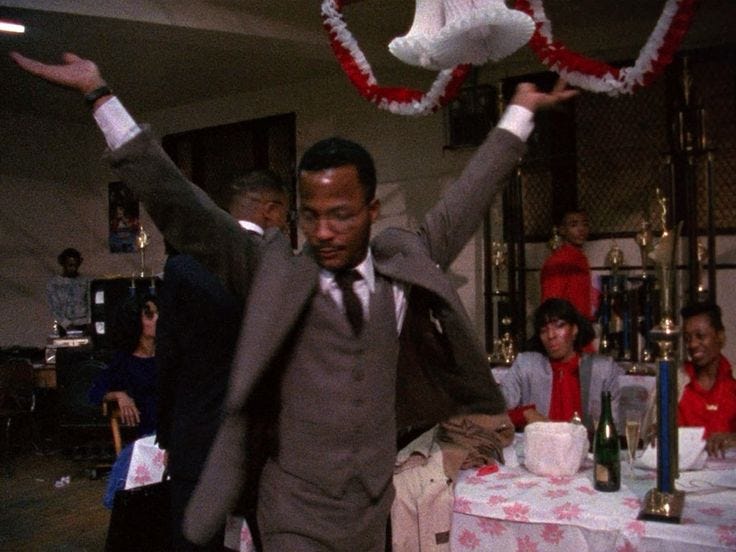
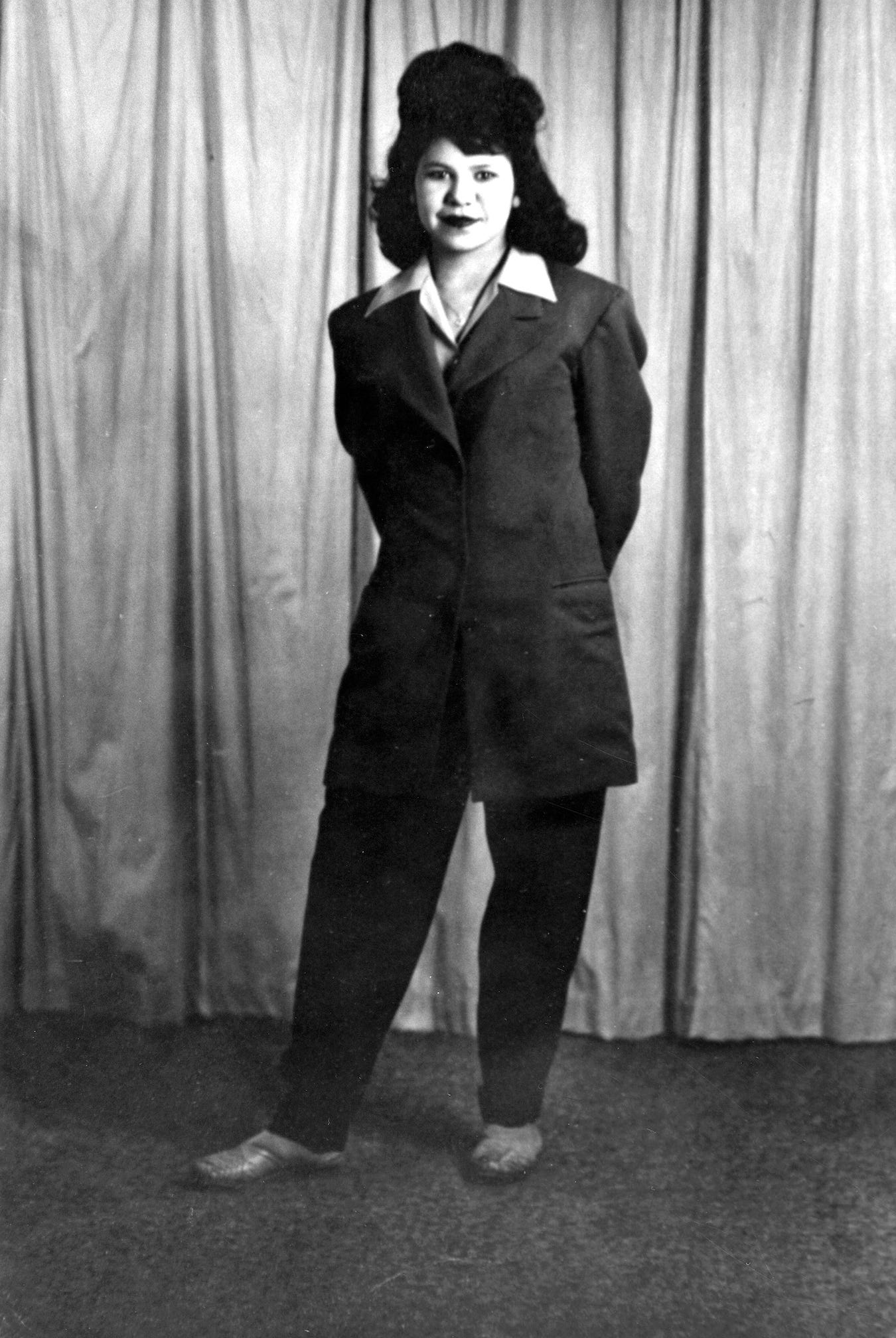
As the next Met Gala approaches, I thought it would be appropriate to again to revisit last year’s theme, “Superfine: Tailoring Black Style.” It’s one of my favorites of all time and consequently a conceptual foundation for my new video essay on pachucas. For context, pachucas are a feminized iteration of the pachuco, or zoot suiter. A zoot suiter is a typically young, urban man of color who wears suits of a very particular cut. Nipped at the waist, large in the shoulders and legs. Accessories include but are not limited to wide-brimmed hats with feathers, rose pins, chains. Pachucas build on that, adding hyper-feminine makeup— red lips, thin eyebrows, big hair— inspired in part by the 1920s Silent Film era, and contemporary 1930s and 40s wartime glam.
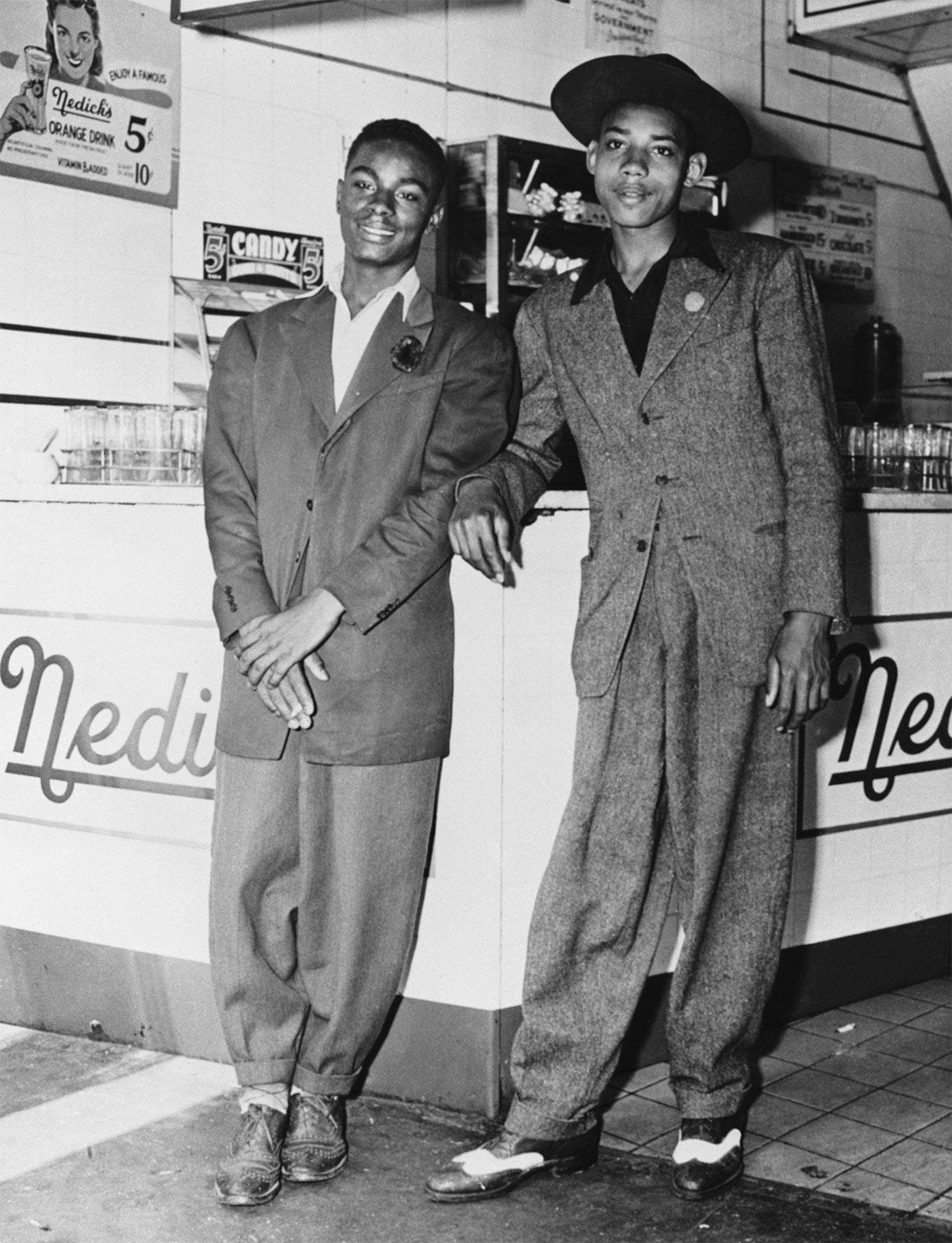
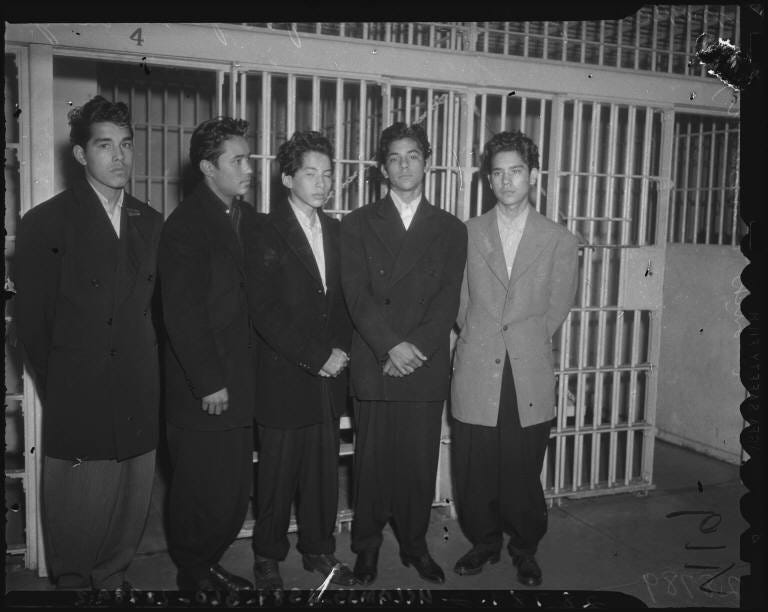
The zoot suit itself is thought to originate in the 1930s among African-American men in Harlem by way of a suit cut dubbed “drapes” from London. It became an emblem of Black, urban youth culture, often worn at jazz clubs. In his autobiography, Malcolm X describes acquiring his first zoot suit as an initiation of sorts— into glamorous city life. He writes:
I was measured, and the young salesman picked off a rack a zoot suit that was just wild: sky-blue pants thirty inches in the knee and angle narrowed down to twelve inches at the bottom, and a long coat that pinched my waist and flared out below my knees. As a gift, the salesman said, the store would give me a narrow leather belt with my initial ‘L’ on it. Then he said I ought to also buy a hat, and I did – blue, with a feather in the four-inch brim. Then the store gave me another present: a long, thick-lined, gold plated chain that swung down lower than my coat hem. I was sold forever on credit. … I took three of those twenty-five cent sepia-toned, while-you wait pictures of myself, posed the way ‘hipsters’ wearing their zoots would ‘cool it’ – hat angled, knees drawn close together, feet wide apart, both index fingers jabbed toward the floor. The long coat and swinging chain and the Punjab pants were much more dramatic if you stood that way.
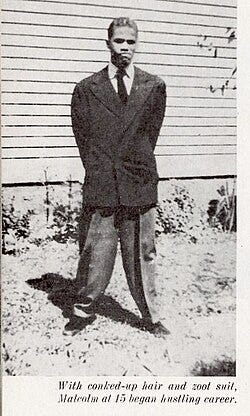
Through the Great Migration and general cultural flows, the zoot suit made its way to young Mexican-American men, and then to young Mexican-American women— pachucas. Clearly, the zoot suit expressed something about marginalized identity in America that was compelling. The large proportions gave presence, weight, legitimacy. But on one’s own terms. As Malcolm X describes, the accessories and swagger accompanied with the suit were in themselves a declaration of not mere presence, but presence on one’s own terms. In Malcom X’s case, presence as a young Black man. This was the threat of the zoot suit, whose wearers were ultimately of a subculture based in part on ethnic pride, but were more often characterized in the mainstream media as juvenile delinquents.
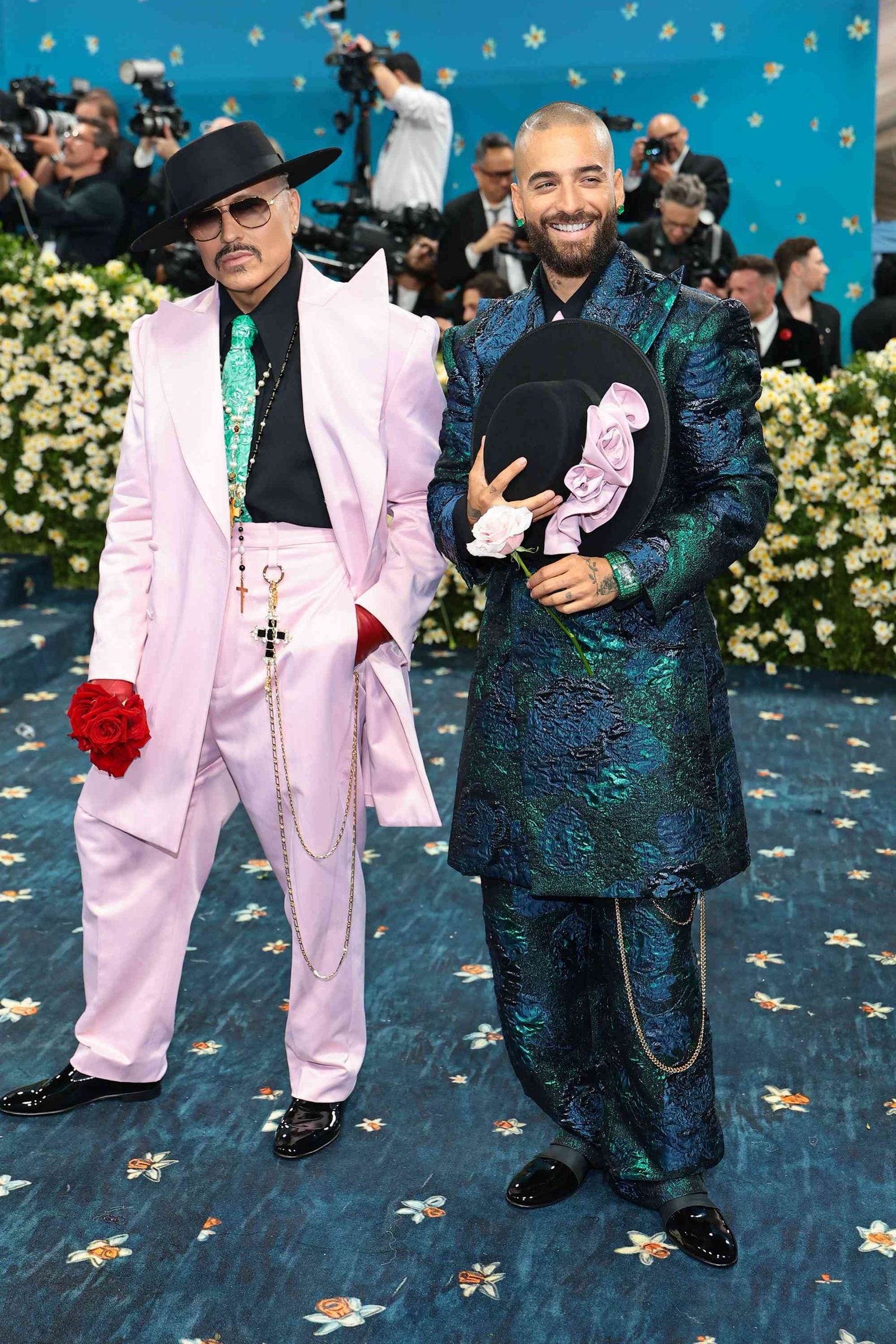
The zoot suit made its presence known at the Met Gala through Willy Chavarria, through his own look and that of Maluma. This alone makes a case for a throughline between the zoot suit— and therefore Chicano fashion, Chavarria’s design heritage— and dandies. But I wanted to articulate it in writing. In Slaves to Fashion: Black Dandyism and the Styling of Black Diasporic Identity by Monica L. Miller, the text behind the Met Gala theme, Miller writes precisely about the suit as a medium, linking the dandy as an ancestor to the zoot suit. She writes:
I position the black dandy explicitly among other racialized performers and performers of masculinity in order to read the dandy as a complicated figure that can, at once, subvert and fulfill normative categories of identity at different times and places as a gesture of self-articulation.
There is so much to pull from here, especially about the dandy as a subversion and fulfillment of the suit as a symbol of Western masculinity— and this applies to pachucas as much as to pachucos! But the thing I take away the most is the self-articulation piece. To me, it shows the intention behind the dandy, the zoot suit. Like a knowing wink. It reminds me a bit of those categories of old-school drag, where contestants are tasked with “realness"— who can best perform as a Wall Street financier, as a power woman? “Realness” as a concept is more than the literal definition. It’s not merely about imitation, but intentional subversion and fulfillment. To me, this exemplifies the suit-as-medium thesis.
This is why I love the theme so much and keep revisiting it, both the event and the concept. It’s not just about “Black excellence,” or “Chicano excellence” in an aspirational way. It’s not about being “old money,” and maybe not even about getting rich. It’s about existing in a category of your own, something totally original and inimitable.
Anyway, if you’re curious about this concept in relation to pachucas, I do a deep dive into this on my YouTube. Check it out, if you please!
I always love the history of zoot suit and seeing it in a modern context!